Category Archives: Interaction design

Thoughts on Media Architecture Biennale 2012

The past three days I have been fully immersed in encounters with media architecture and discussions with the best thinkers and doers in the field at the Media Architecture Biennale 2012. Personally, I love small but very focused event like this; the established stars of the field mingle with up-and-coming researchers and practitioners, and everybody is driven by a burning passion and curiosity. As one of the organizers of the Biennale, I am indebted to all who helped make it happen and grateful for the diverse insights offered, both during invited talks and academic presentations and in all of the in-between discussions and exchanges that are an equally important part of an event like this. Quite a bit has been written and tweeted about the event in our community over the past couple of days (here are the storyfied versions of day 1, day 2 and day 3), and I won’t try to offer a comprehensive summary of the event. Rather, I’ll offer eight considerations that I take with me from the Biennale as a synthesis of all of this input, and which I hope to delve more into in my future work:

1 – Participation (the theme of this year’s Biennale) is indeed a key issue for media architecture, both with regards to the design process and the use situation, and there are many open oportunities and challenges for us to address.

2 – The task of developing methods and approaches for involving people is difficult in the fields of interaction design and architecture, respectively. When you merge the two, the difficulties are even greater – as a researcher, this is fabulous news!

3 – Media architecture can enable us to both read and write the space, and perhaps even alter the script of a space; a big question is how we can make people aware of these opportunities and support them in meaningful ways.

4 – One of our key objectives as thoughtful researchers and designers of media architecture will be to build and explore meaningful alternatives to full-blown money architecture (e.g. advertisement), among other things by informing and involving citizens, public institutions and civic servants of the places we design in, for and with.

5 – Working on a neighbourhood level (in between personal and urban scale) could be a very fruitful way of moving forward and exploring the intersections between interfaces, spatial surroundings and social sensibilities.

6 – There is a massive potential in exploring different modalities and poetics in media architecture than the visual spectacle, and at the Biennale many of the reseach papers as well as keynote presentations point towards ways of doing so.

7 – The notion of architecture as a composition of shearing layers of change (à la Frank Duffy and Stewart Brand) definitely also applies to media architecture; the components of architecture have different life spans and respond to needs, rhythms and situations that change at different speeds, and we have to consider what this means when we develop media architecture.

8 – The support from the municipality, companies and public institutions, combined with the cross-disciplinary academic resources in the area, suggests that Aarhus can be be a great living lab for interactive urban experiments, a Large Media Architecture Collider, in the years leading up to the next Media Architecture Biennale (2014) and the European Capital of Culture 2017, both set in Aarhus.


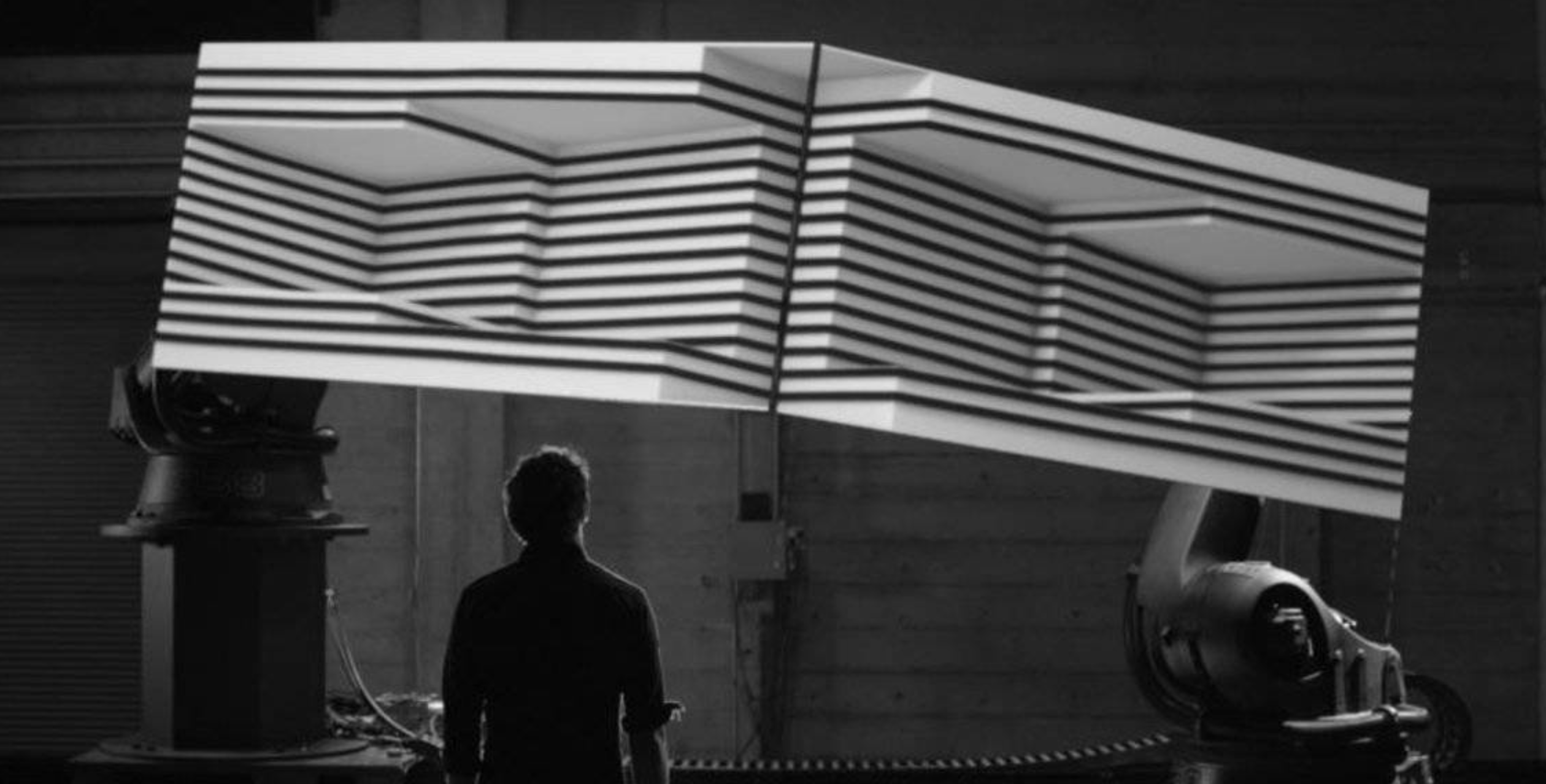
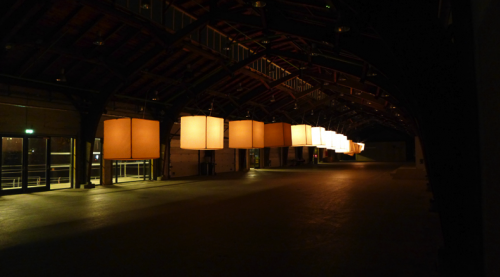
Spine, an installation created for the Biennale by Kollision, CAVI, Mads Wahlberg and Henrik Munch

Media Architecture Biennale 2012


Media architecture transforms cities, buildings, and people. This week, you can join the world’s top experts in discussing and outlining the media architecture of the future at the Media Architecture Biennale 2012. The biennale takes place on 15-17 November 2012 here in Aarhus, Denmark and brings together architects, academia, and industry from around the globe.

Among the speakers are media artists Ben Rubin, architect and designer Jason Bruges, Bjarke Ingels Group, Gehl Architects, professor of architecture Antonio Saggio, professor of media archaeology Erkki Huhtamo – and many, many more.

The biennale also features an academic conference track (chaired by your’s truly and Ava Fatah from The Bartlett), an exhibition, awards, industry sessions, workshops, an iPad compendium, and a gala dinner.

Follow us on Facebook and Twitter to stay updated with the latest news about the event.

Tangible 3D Tabletops

Today I’m giving a paper presentation at Nordichi about a new type of interface, Tangible 3D Tabletops, that Kim Halskov and I have developed over the past year. As is implied by the name, the interface combines elements of tangible tabletops (e.g. Reactable) and 3D projection onto physical objects. This allows us to augment tangible objects with visual material corresponding to their physical shapes, positions, and orientation on a tabletop. In practice, this means that both the tabletop and the tangibles can serve as displays. In the paper, we present the basic design principles for this interface, particularly concerning the interplay between 2D on the tabletop and 3D for the tangibles, and present examples of how this kind of interface might be used in the domain of maps and geolocalized data. We then discuss three central design considerations concerning 1) the combination and connection of content and functions of the tangibles and tabletop surface, 2) the use of tangibles as dynamic displays and input devices, and 3) the visual effects facilitated by the combination of the 2D tabletop surface and the 3D tangibles.

The slides from my talk are embedded below, and a video is coming up as soon as the IT University of Copenhagen get their wifi up and running.

Dalsgaard, P., Halskov, K. (2012): Tangible 3D Tabletops: “Combining Tangible Tabletop Interaction and 3D Projection”. In Proceedings of NordiCHI 2012, Copenhagen, Danmark.

Pragmatism, constraints and design creativity

Currently in Glasgow for the International Conference on Design Creativity, at which Michael Biskjaer and I have just given a talk about our paper Toward A Constraint-Oriented Pragmatist Understanding Of Design Creativity (PDF). The paper explores the potentials of pragmatist philosophy to enrich the discourse on design creativity in general and the concept of constraints specifically. We argue that pragmatism can inspire and inform the study of constraints in design creativity by offering a coherent and well-developed frame of understanding how designerly inquiry unfolds as a complex interplay between the designer and the resources at hand in the situation, which may continuously alternate between constraining and enabling roles, or even take on both roles simultaneously.

The slides from our talk are embedded below:

Talk: Tools for prototyping hybrid interactions

An upcoming talk for all of those in the neighbourhood who share an interest in spatial interaction design: Next week, Alexander Wiethoff from University of Munich gives a talk on tools for prototyping hybrid interactions here in Aarhus:

“New forms of interfaces that facilitates interactions of tangible og intangible nature also demand new prototyping methods. But formal design processes, such as are available for screen-based interactions, have yet to be elaborated in this realm. An approach that is accommodating low and high fidelity prototyping methods can help designers facing domain-specific challenges in a quite large design and opportunity space.”

One of the outcomes of this work is the Sketch-a-TUI, a toolkit for sketching tangible user interfaces on capacitive screens using physical objects of almost any material as user interfaces.

Time and place: August 30, 14:15 — 15:30, the Peter Bøgh Andersen auditorium, the Nygaard Building, Aarhus University.

Inspiring reads, July 15th through July 21st

Creative Kinect hacking – By reducing the technical entry point, the Kinect has levelled the playing field and allowed a lot more creative experiments to surface

New Design Practices for Touch-free Interactions – Touch-free gestures and Natural Language Interaction (NLI) are bleeding into the computing mainstream

7 Killer User Interface Designs For Gestures – Pull, unfold, rotate, push, slide, pinch

zSpaceHolographic Display – Tracking points embedded in the glasses frames to follow the orientation of your face to the screen

17 Great Wireframing Tools for Web Designers

The 15 best tools for data visualisation

Inspiring reads, June 25th through June 28th

Sketchnotes from DIS2012 – Great work by Mie Nørgaard brings selected talks from DIS 2012 to life

Future InteractionsNordiCHI 2012 workshop on critical design approaches to explore urban data transactions

Aesthetics Reloaded – Conference on the aesthetics of digital technologies in Aarhus, December 11-13.

Inspiring reads, June 20th

David Barrie on ‘Open source’ place-making – A collective approach to the development of cities

Digital Placemaking – Integrating social media into placemaking practices at the Project for Public Spaces

Creating together – Examples of how participatory design increases the understanding of the design space and main issues as well as the quality of the solution


Can We Please Move Past Apple’s Silly, Faux-Real UIs? – Critique of skeumorphism in interface design

Why "Just Enough Is More" is not Enough – Erik Stolterman weighs in on the interface skeumorph debate:
“To be designerly means to be able to understand what is appropriate for a particular design. It means to be able to make the required judgments about all aspects involved and about how they come together as a whole in an adequate composition….The key to good design is not Metro design language or any other language or principle. The key to good design is to be able to execute good design judgment.”

Reflective Design Documentation

One of the crucial aspects of conducting interaction design research is the establishment of reliable and structured ways of capturing and documenting the data generated by the research, so that it can be subjected to analysis and reflection. Documentation may serve the double role of supporting reflection, thereby serving as a source of insight, and providing evidence that supports the insight gained. Given the inherent complexities of design, this process of capturing and documenting design projects can be daunting, especially since there are few resources and tools developed for this particular purpose.

During the past couple of years, my colleagues and I have developed and employed a system designed for the specific purpose of documenting design projects and prompting reflection about design events, called the Project Reflection Tool (PRT). Kim Halskov and I have written a paper entitled Reflective Design Documentation about the insights from our use of this system, and I’m currently at the Designing Interactive Systems conference in Newcastle to give a talk about the paper. The paper is available for download here, and I’ve attached the slides from my talk below: